Reducing Food Bank Reliance: Instant Neighbour's Experience as a Cash First Trusted Partner
The referral process for Cash First was simple and clear. Because everything was set out so well, it was easy to work through alongside clients.
Date
Category
Writer
There was no technical jargon or unexpected questions, and the guidance provided by ACVO meant I could quickly get up to speed and feel confident supporting people through the process. It felt straightforward for both professionals and clients, which made a real difference.
Supportive Decision-Making
The panel decision-making process was very supportive. It allowed for best practice to be shared and ensured that decisions were made with the client’s full situation in mind - not just their immediate financial need, but also their safety and personal wishes.
The flexibility around how money could be given meant support could be tailored depending on any risks involved, helping make sure the right approach was taken for each individual.
The panels also created an opportunity to share knowledge between partners, allowing services to be shared more widely - not just for Cash First clients, but beyond the project as well.
Wrap-around Support
Wrap-around support was a key part of the project, with a strong focus on understanding each client’s situation in a more holistic way. This helped build connections and strengthen collaborative working between trusted partners.
Emergency food parcels can often mask the underlying issues people are facing. By focusing on both financial and wider support, Cash First gave clients the opportunity to look beyond immediate challenges and start addressing things like debt, employment, and overall wellbeing in a way that isn’t always possible when the focus is just on day-to-day survival.
For clients supported by Instant Neighbour, this often meant being connected with debt advice, mental health services, and support around energy costs and efficiency.
Some people simply wouldn’t have known where to turn without this project.
It also allowed me to build more meaningful relationships with clients, with more time to understand individual circumstances and offer relevant support.
Importantly, wrap-around support helped address the deeper issues linked to food poverty and made it easier to confidently signpost and refer both Cash First and non-Cash First clients to the right services at the right time.
Impact and Outcomes
The figures reported by ACVO are incredibly positive. 92% of clients reduced their use of food banks, and 78% did not return - powerful outcomes that reflect the difference the project has made.
At the same time, some clients have returned to Instant Neighbour. This doesn’t reflect failure - rather, it highlights the reality of the current climate, with barriers to employment, ongoing health issues, and levels of debt that cannot be resolved through short-term support alone. In some cases, people return not for food, but for advice, reassurance, or further signposting - with around 42.9% of Cash First clients coming back for this kind of support.
Each person’s situation is different, and progress is not always linear. Even a small amount of additional financial support can reduce pressure and give people a sense of dignity - whether that’s being able to choose their own food, replace essential household items, or simply have a bit of breathing space.
Challenges and Capacity
From a service delivery perspective, the project was not without its challenges. Managing referrals, one-to-one support, and reporting responsibilities required significant time and capacity. However, the support from ACVO, and from Amy in particular, was invaluable in making sure clients continued to receive the help they needed.
It’s important that the level of resource required to deliver work like this is recognised. Whether that’s through staffing, volunteers, or flexible funding, sustaining this kind of support depends on having the right infrastructure in place.
Looking Ahead
Personally and professionally, my hope is that the success of Cash First - particularly in Aberdeen - is recognised more widely. If Scotland’s ambition is to reduce the need for food banks, eventually eradicating them, then projects like this need to be acknowledged and built upon, with a focus on long-term, systemic change.
It would be fantastic to see further funding to continue and expand the project locally. The difference it has made is clear - not just in financial terms, but in giving people choice, dignity, and access to wider support. The fact that some clients still need help after receiving financial support should not take away from its success; it reflects the complexity of people’s circumstances and the wider challenges within the system.
Final Thoughts
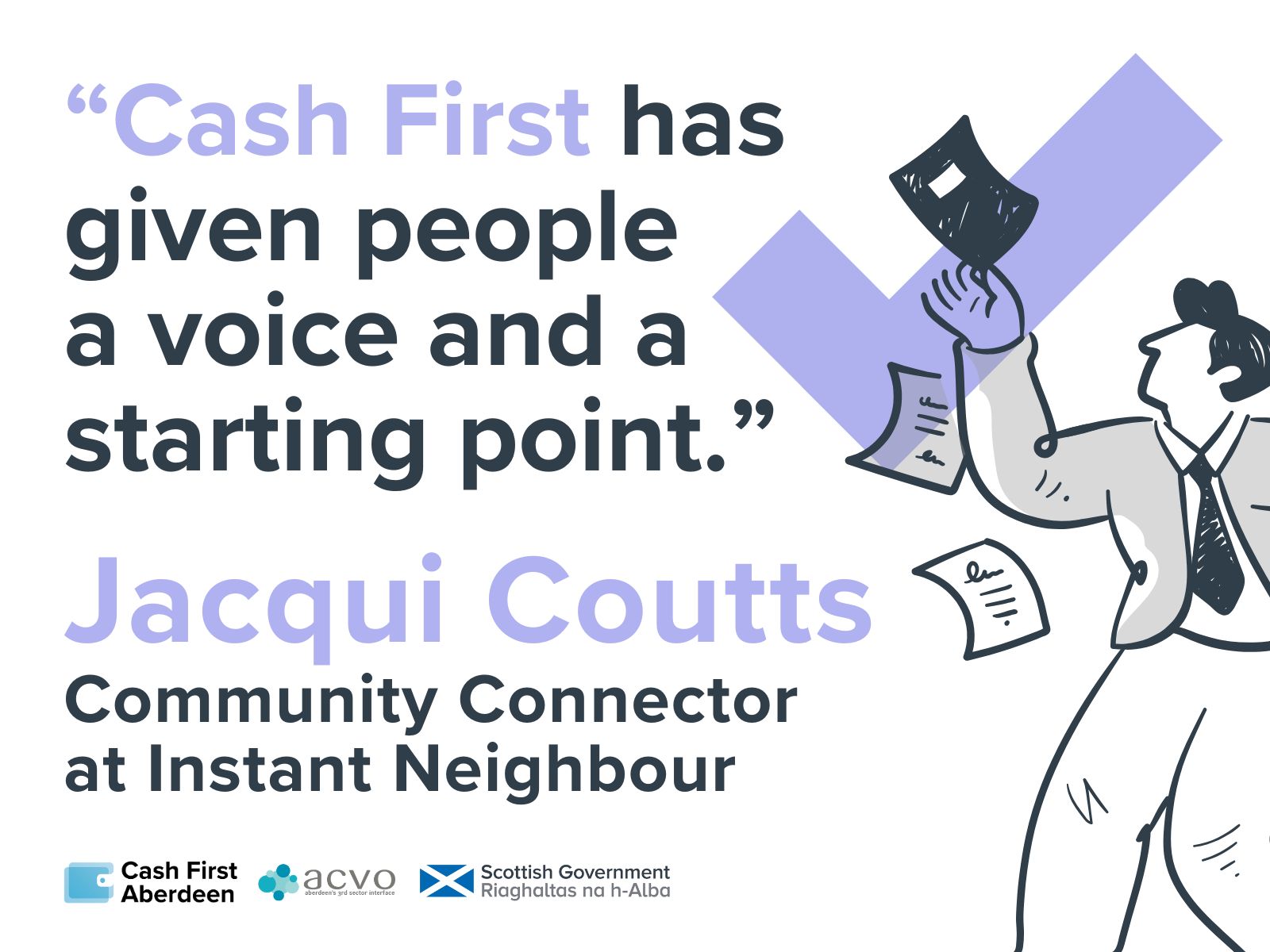
Ultimately, Cash First has given people a voice and a starting point. It has highlighted the impact that financial pressure, and particularly debt, can have on all aspects of life - including mental and physical health.
Even a small amount of financial support can make things feel more manageable, helping people to see a way forward where previously it may not have felt possible.
Latest Updates
Read the latest news and insights from Cash First Aberdeen.